If you’re one of the lucky thousands that spent the last week hovering over the ‘submit’ button of the BBC Writers Open Call (or any competition, for that matter). Congratulations! You did it! But… Now what?
Do you spend the next 4 months refreshing your emails every 10 minutes?
Do you pick over the minutiae of your script, lamenting the choices you didn’t make?
Or, do you follow the steps laid out in this article and actually reward yourself for doing something amazing!
Take a breath
First things first, take a breath. The last few days and weeks have likely been intense. Questioning character motivations, living inside the mind of your antagonist, and agonizing over scene structure can leave you cognitively exhausted.
With that in mind, don’t begrudge yourself a couple of doom-scrolling days. Catch up on the news, and take a look at what Trump and Clinton were getting up to. Whatever your poison, indulge. For me, it’s video games. Once the shackles of the script come off, I lose myself in Minecraft. Something about the game just resets me. You should do the same. Just make sure that whatever you do to take a breath, it’s away from narrative fiction for a while.
Why not:
Catch up with neglected friends & family
Go a three night weekend bender
Download ‘the apps’
Play a sandbox video game
Host a dinner party (or go to one – less stressful)
Watch paint dry
Whatever you do, just walk away from your laptop.
Don’t Read Your Script
So many writers fail at this very basic instruction. Don’t be one of them. It doesn’t matter how much time has passed since you clicked ‘submit’, you’re going to get nothing out of reading your script beyond heightened anxiety or a false sense of security.
The fact is, you have no idea what the competition readers are looking for, even if your script rigidly sticks to the provided brief. That ‘clumsy’ scene structure might be the injection of personality they’re looking for. That ‘paradigm antagonist’ might be part of a tedious trend readers are finding. You just don’t know.
But if you read your script before getting your result, you’re going to pretend, consciously or unconsciously, that you are reading through the eyes of a competition reader. When you do that, you’re going to make edits. Then you’re going to doubt that the script was ready. Then you’re going to stop checking your emails. Then you’re going to second-guess your next idea. Then you’re going to give up on that next idea. Then you’ll not bother coming up with a third idea.
You know where that chain ends.
So, whatever you do, don’t read your script before getting your result.
Watch and Read as Much as You Can
Did you enjoy your breather? Good. Now be a consumer again. Get to know your local cinema staff by name, become a known entity at all the theatres in a 10 mile radius, and buy a new bookshelf.
To be honest, we’re writers, so I know damn well you’ve mostly ignored point number one, and there’s a notepad or notes app somewhere that’s brimming with potential new ideas. But I urge you, before you steamroll into something too soon, have a look at what else is out there!
When you do, ask yourself two questions:
What do I love about this?
Was this in my last script?
The second question is the most important here, and we’ll come onto it in the last point on this list, but for now answering the questions will be enough.
Fill a notebook with thoughts, musings, observations, and shared opinions on the stories of today. Yes, shared. Make sure you’re not locking yourself in a dark room while consuming the latest stories. Get the opinions of your friends and listen to strangers. They’re your audience, so make sure you’re thinking about things that interest you AND are potentially entertaining for others.
Write Something Else
Submitting a script to a competition is like breaking up with a partner you’re still in love with. You know it’s time to move on, but they’re always on your mind and in your heart. The best way to get over them? Get under someone else.
If you’ve followed the steps laid out in this article, you’re probably ready for the most important step in every writers career; writing the next thing.
In the previous point I told you to, while consuming new material, ask the question “was this in my last script?” The reason this question is so important, especially for early writers, is to make you self-aware about whatyou’re writing. When I look back over my early scripts, do you know what I’ve found?
The same story, told around 50 different ways.
Realising that has been liberating. Now, whenever I turn to a new project, I’m able to ask myself whether it really is a new project, or whether it’s an old project wearing a new mask. It wasn’t liberating at first. Good God, the first time I realised it, I nearly snapped my laptop in half and swore to never write anything ever again. Am I a one-trick pony? Am I a fraud, or worse, an amateur?
You’ll go through the same thing. Don’t worry, it’s natural. Maturing is the process of recognising what’s copied content and what’s a thematic throughline. All artists have themes they return to. You just need to learn the difference.
If you take a breath, avoid reading your script, and expose yourself to the best and brightest, you’ll naturally write something new. And I, for one, can’t wait to read it.
If You Haven’t Hit Submit Yet
Maybe you haven’t even submitted your script yet! Maybe there’s still time to get the confidence that your script is ready!
If that’s the case, then I’m here to help.
Whether there’s months to go and you’re looking for development assistance, or the deadline is under a week away and you need a final pass on your script, you’re not alone.
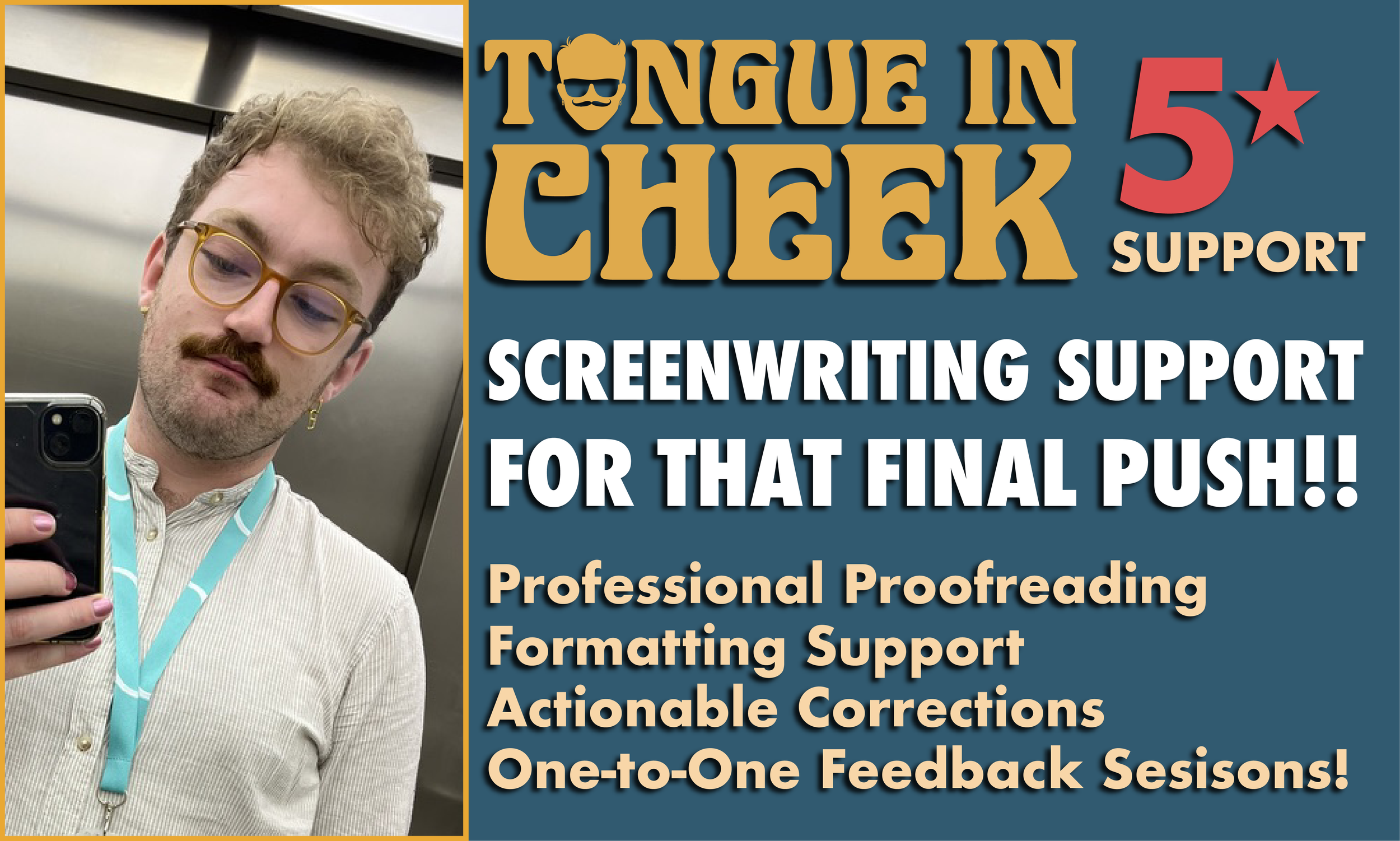
I offer quick, thorough, professional, and (for now) cheap proofreading and editing support for any and all early career scriptwriters. Head to Fiverr now to see how I can help you become the best writer you can be!